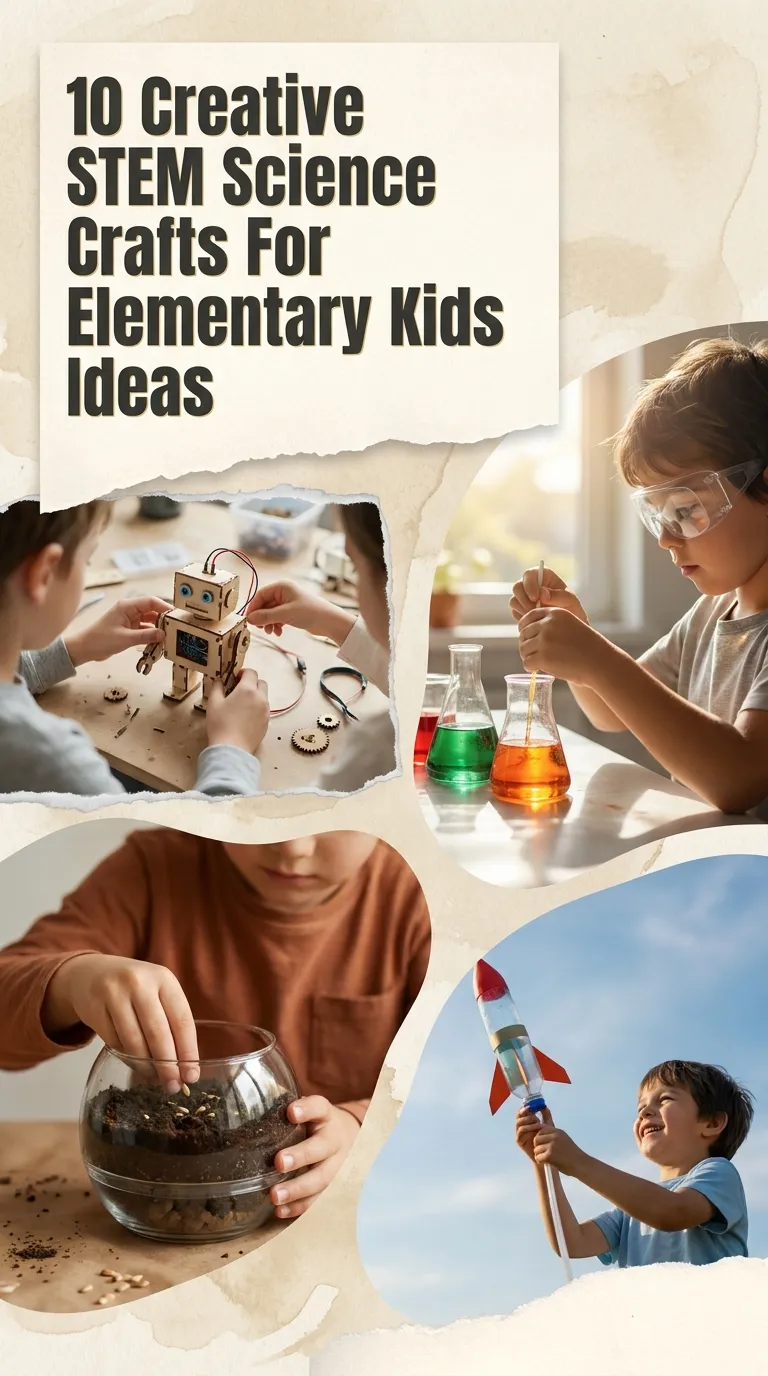
Engaging elementary students in science, technology, engineering, and math (STEM) is most effective when lessons are tactile, visually exciting, and playful. Combining artistic craft projects with foundational scientific principles transforms abstract concepts into tangible discoveries. When children build, test, and decorate their own functional models, they develop both creative confidence and critical problem-solving skills.
Here are 10 hands-on STEM science crafts that turn everyday household materials into dynamic learning adventures for elementary learners.
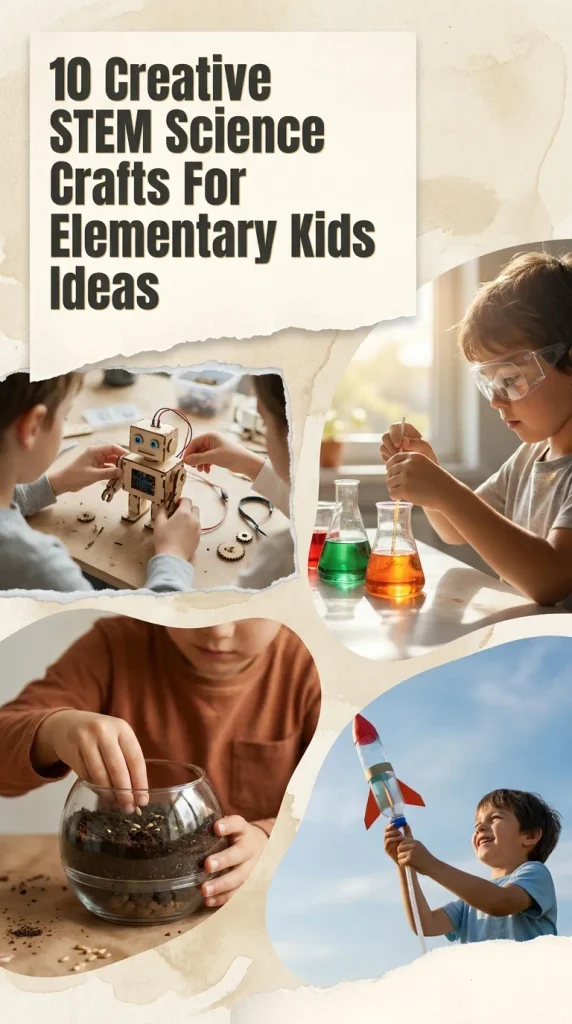
1. The Capillary Action Walking Water Rainbow
This vibrant craft bridges color theory and fluid dynamics. By setting up a row of clear cups alternating between colored water and empty vessels, children use folded paper towels as bridges between each cup. Over a few hours, the water travels upward against gravity through capillary action—the same force plants use to draw moisture from soil. As the primary colors mix in the empty cups, kids witness the creation of secondary shades while exploring the cohesive and adhesive properties of water molecules.
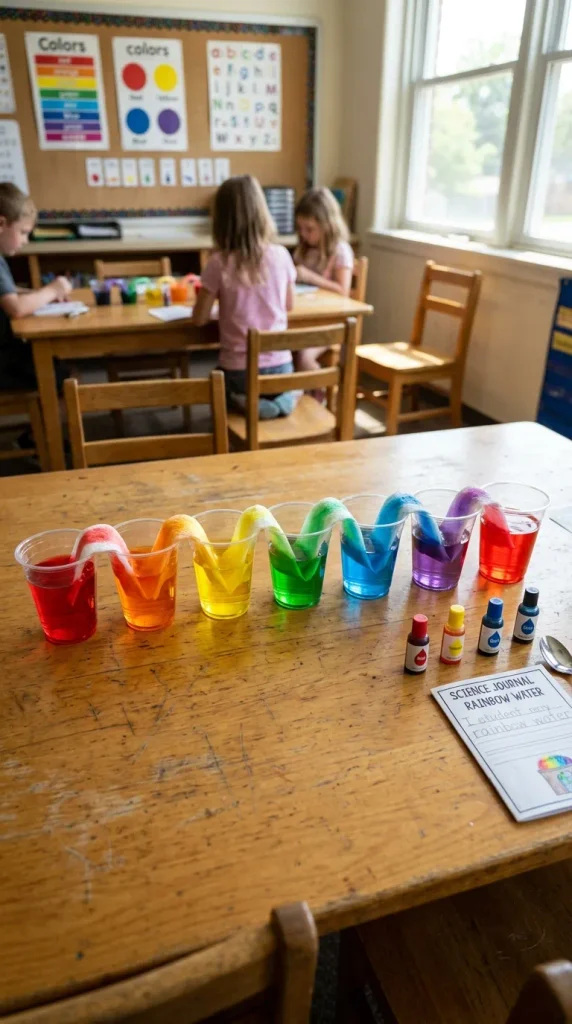
2. Upcycled CD & Balloon Hovercrafts
Aerodynamics and Newton’s laws of motion come alive with this simple engineering build. Using a repurposed compact disc, a pop-up bottle cap, and a latex balloon, students construct a low-friction air-cushioned vehicle. When the inflated balloon releases air through the center of the CD, it forms a thin cushion of air beneath the disc, dramatically reducing surface friction. Kids can glide their hovercrafts across smooth tabletops, testing how different surface textures and balloon sizes affect speed and travel distance.
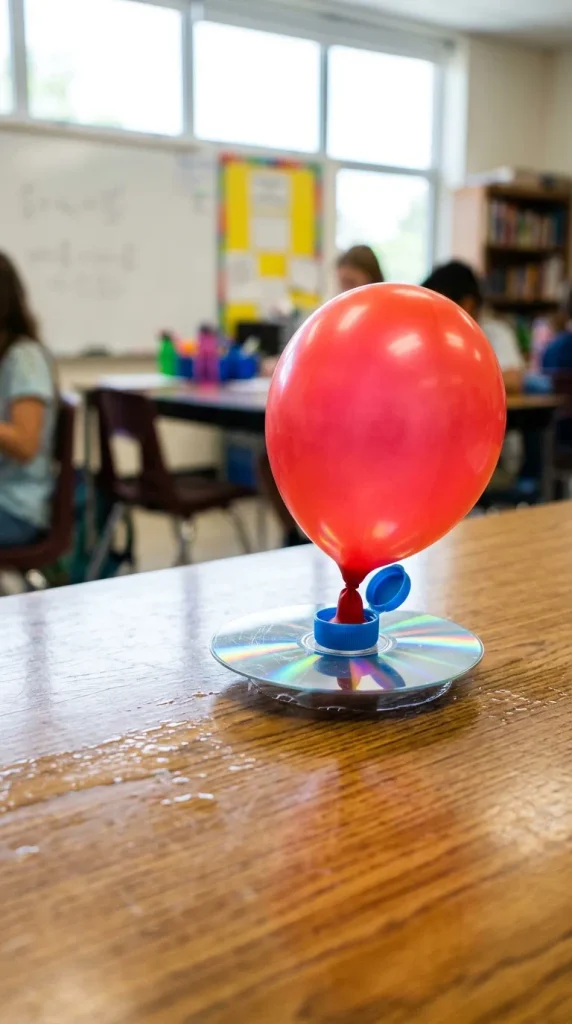
3. Straw & Yarn Articulated Robotic Hands
Human anatomy meets mechanical engineering in this interactive cardboard craft. Kids trace and cut out an outline of their own hand on thick cardboard, scoring the finger joints to allow bending. By gluing segments of plastic drinking straws along the fingers and threading yarn through each joint down to a wrist handle, children create functional robotic fingers. Pulling individual strings mimics the human muscular-tendon system, demonstrating how tension creates movement.
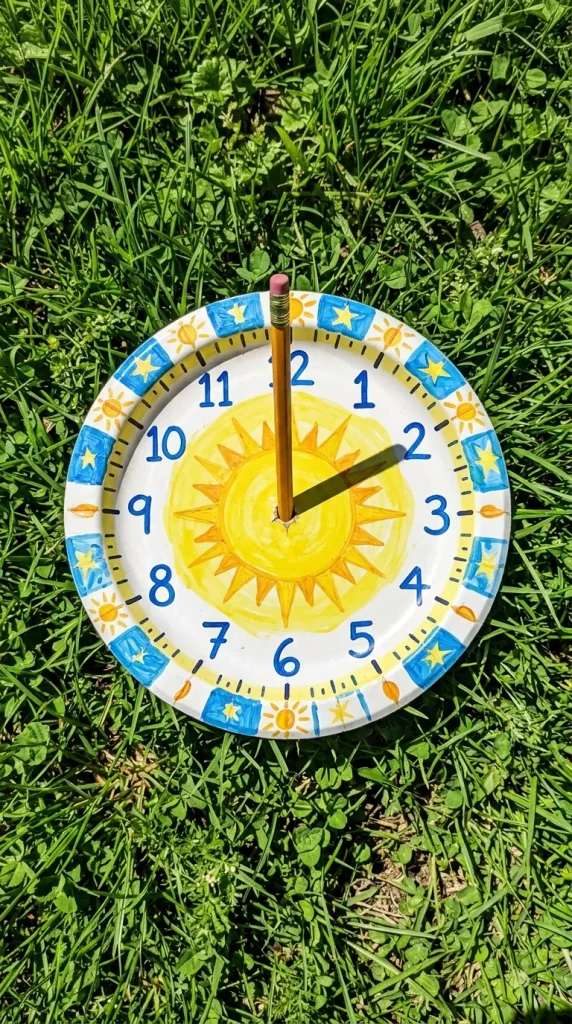
4. DIY Solar System Paper Plate Shadow Clocks
Astronomy and timekeeping unite in this outdoor solar exploration craft. Elementary kids decorate a heavy paper plate with hour markings, positioning a vertical wooden dowel or straw in the center as a gnomon. By taking the sundial outside on a sunny afternoon and aligning it with the sun, they observe how the Earth’s rotation shifts shadows across the plate over time. It offers a practical foundation for understanding planetary orbits, light paths, and early human engineering.
5. Density Discovery Lava Lamp Sensory Bottles
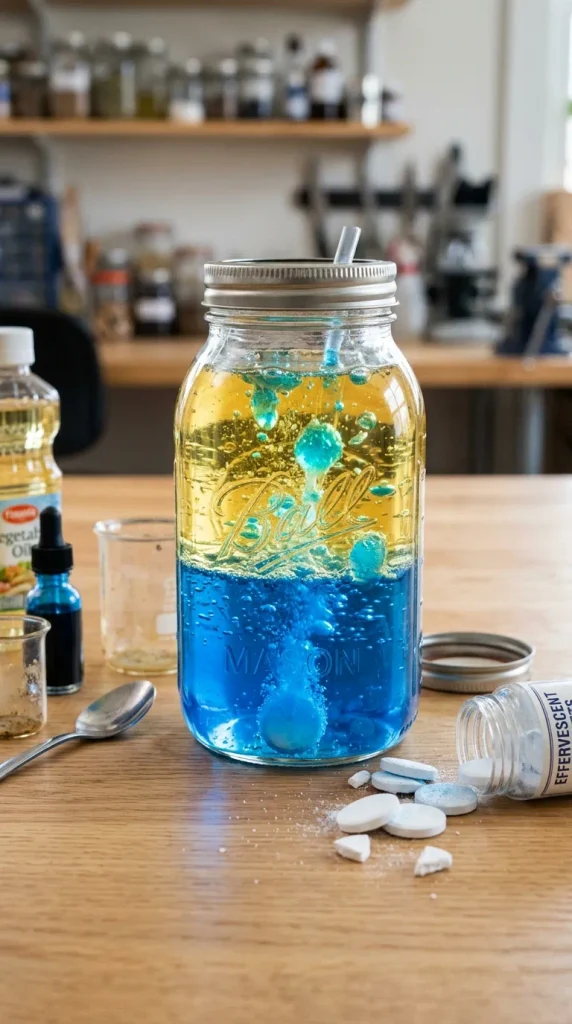
Density and chemical reactions take center stage in this mesmerizing, mess-free craft. In a clear glass jar or plastic bottle, children layer water tinted with food coloring and vegetable oil, noting how the less-dense oil floats neatly on top. Dropping in an effervescent antacid tablet releases carbon dioxide gas bubbles. The bubbles latch onto the colored water droplets, carrying them up through the oil layer until the gas escapes at the surface, sending the droplets floating back down in a continuous retro dance.
6. Cardboard Marble Coaster Kinetic Physics Runs
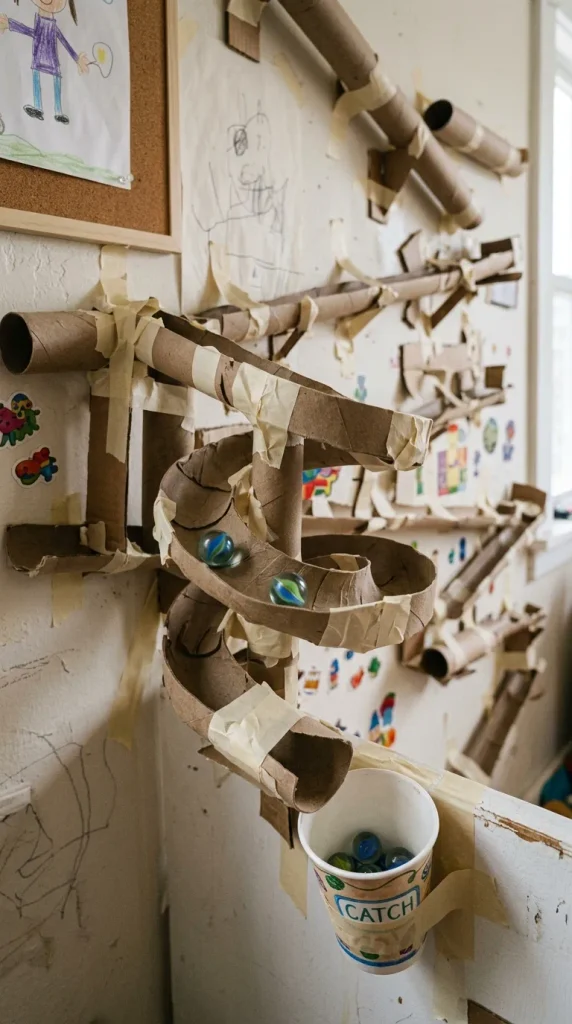
Budding civil engineers can explore potential and kinetic energy by assembling customized marble tracks using recycled cardboard tubes, cereal boxes, and masking tape. Kids design ramps, sharp turns, drops, and funnels along a wall or within a standing box frame. As the marble travels from the highest starting point to the finish line, learners experiment with gravity, momentum, slope angles, and centrifugal force, troubleshooting why a marble might stall or jump the track.
7. Chromatic Coffee Filter Fluttering Butterflies
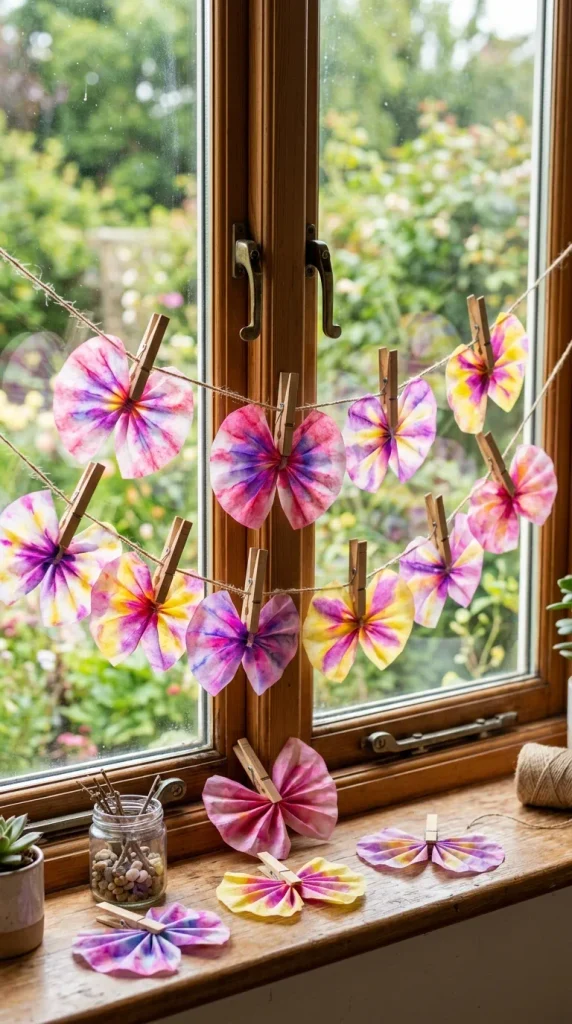
Chromatography—the scientific separation of mixtures—becomes beautiful window art. Students use water-soluble markers to draw patterns around the center of circular white coffee filters. When water is dropped onto the center, it wicks outward, dissolving the ink pigments and separating them based on molecular weight. Once dry, the colorful circular filters are pinched in the middle with a wooden clothespin and pipe cleaners to create vibrant, winged butterflies showcasing capillary diffusion and color chemistry.
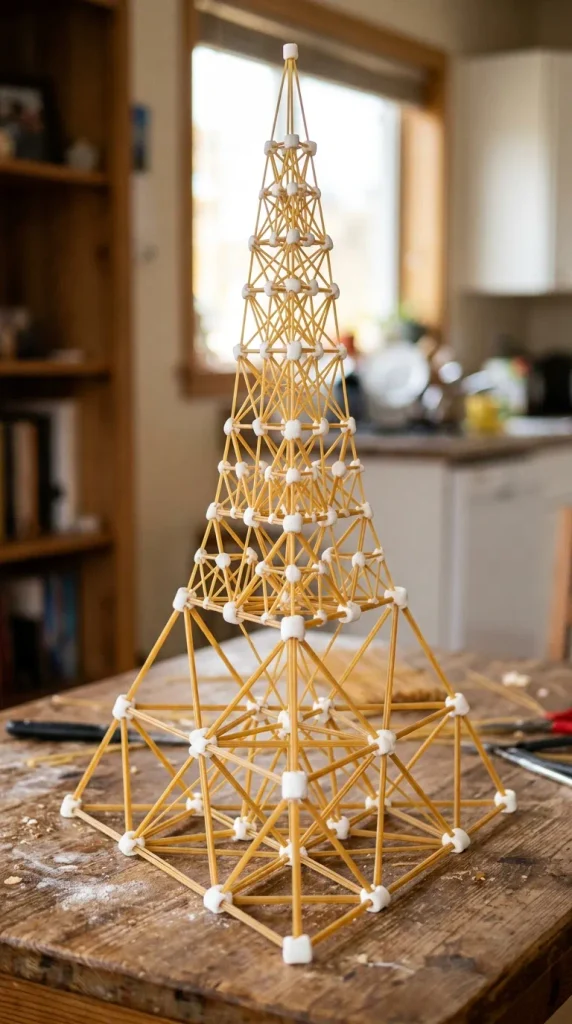
8. Structural Spaghetti & Marshmallow Geometric Towers
Civil engineering and architectural geometry form the core of this classic structural challenge. Armed with dry spaghetti noodles and mini marshmallows, elementary students construct freestanding towers, geodesic domes, and bridge spans. Through trial and error, builders discover why triangles provide superior structural strength compared to squares or rectangles. The craft encourages spatial reasoning, load-bearing analysis, and resilient problem-solving when tall structures begin to lean.
9. Pocket Constellation Light-Up Viewer Boxes
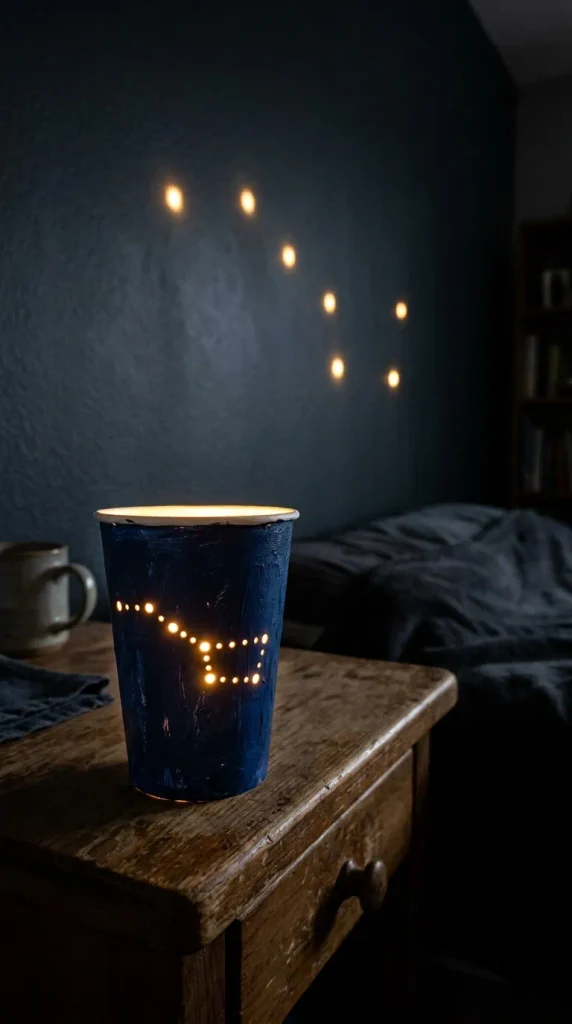
Bring stargazing indoors by merging astronomy with circuit-free projection. Children paint small recycled cardboard boxes or paper cups in deep midnight hues. Using constellation template cards, they poke pinholes through the bottom to replicate celestial patterns like Ursa Major, Orion, and Cassiopeia. When a flashlight or phone light shines through the open end, the constellation projects clearly onto a dark bedroom ceiling or wall, providing a memorable lesson in celestial mapping.
10. Recycled Balloon-Powered Jet Racer Cars
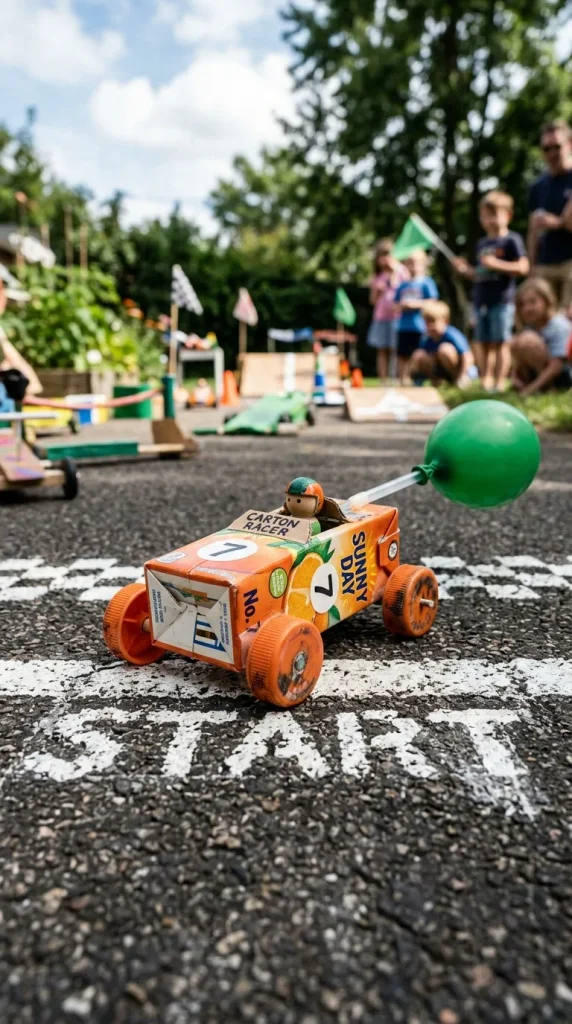
Physics in motion takes over the classroom with miniature jet-propelled racer cars. Using clean juice cartons or lightweight cardboard for the chassis, plastic bottle caps for wheels, and wooden skewers for axles, students build rolling vehicles. A balloon taped to a straw serves as the exhaust propulsion system. When blown up and released, the escaping air demonstrates Newton’s Third Law—for every action, there is an equal and opposite reaction—as the car accelerates forward.