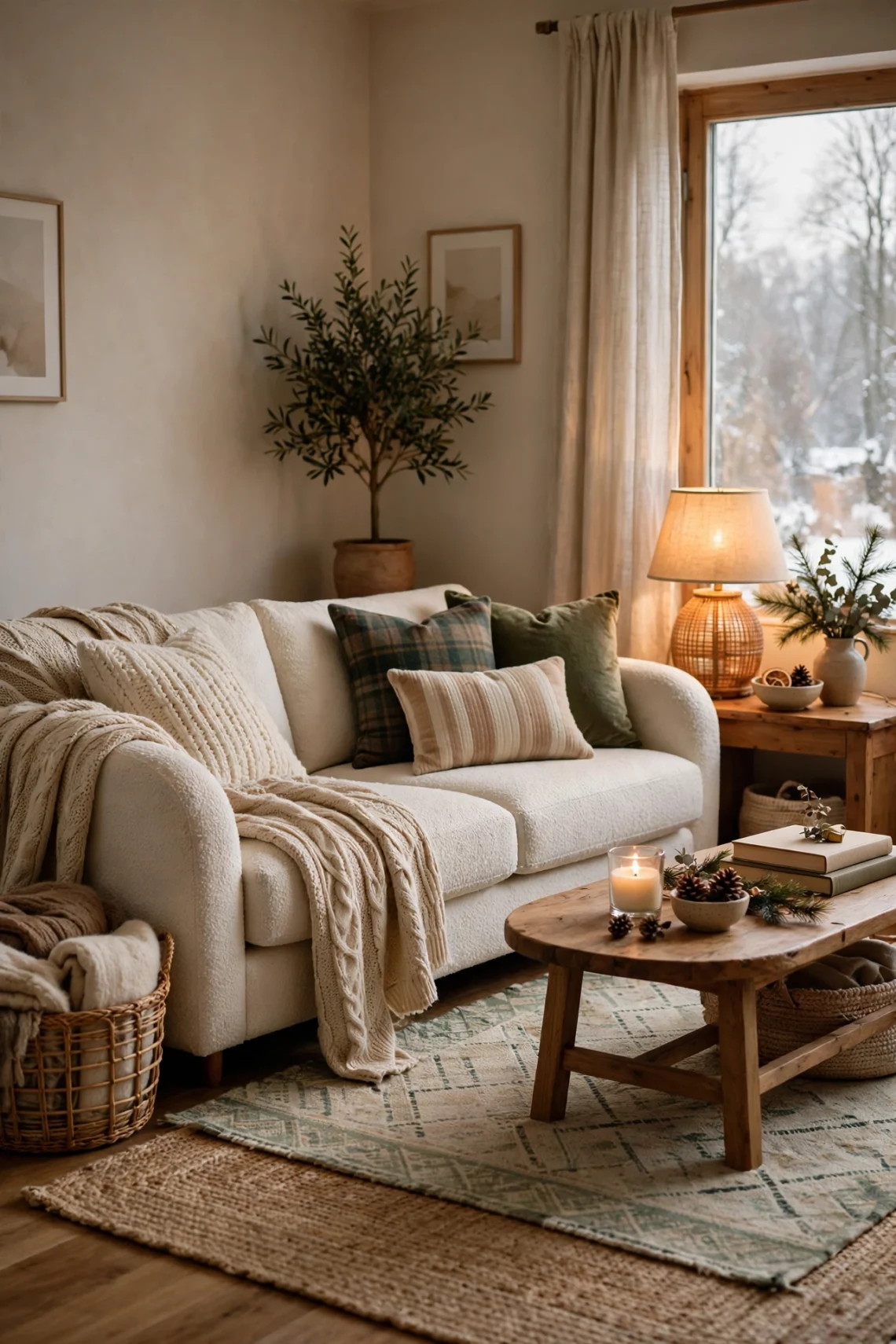
I stood in the doorway on a gray January afternoon and looked at my living room the way a guest would see it for the first time. The sofa sat flat against the far wall, the rug stopped short of the chairs, and the corner by the bookcase stayed dark by four o’clock. The low winter light showed me where the layout worked against itself, with long shadows and empty space where no one sat.
I did not want to buy new furniture or start a large project in the middle of winter, and I did not want a room that looked right for one holiday and wrong again in February. I wanted to refresh my living room by moving what I already owned, changing the soft things I could make myself, and testing each change by living with it for a day. So I walked the room slowly, zone by zone, from the doorway to the sofa wall and from the dark corner to the windows, asking what each spot needed to feel warmer and easier to use.
This tour follows that same walk, in the order I made the changes, and each idea is something I tried with my own hands in this room. I moved furniture a few inches at a time, I sewed new covers, I layered rugs I already had, and I took things off shelves instead of adding more. Stand where I stood, and give each swap a full evening, because winter rooms reveal themselves slowly, in lamplight and morning light.
1. Pull the Sofa Off the Wall and Open Up the Middle
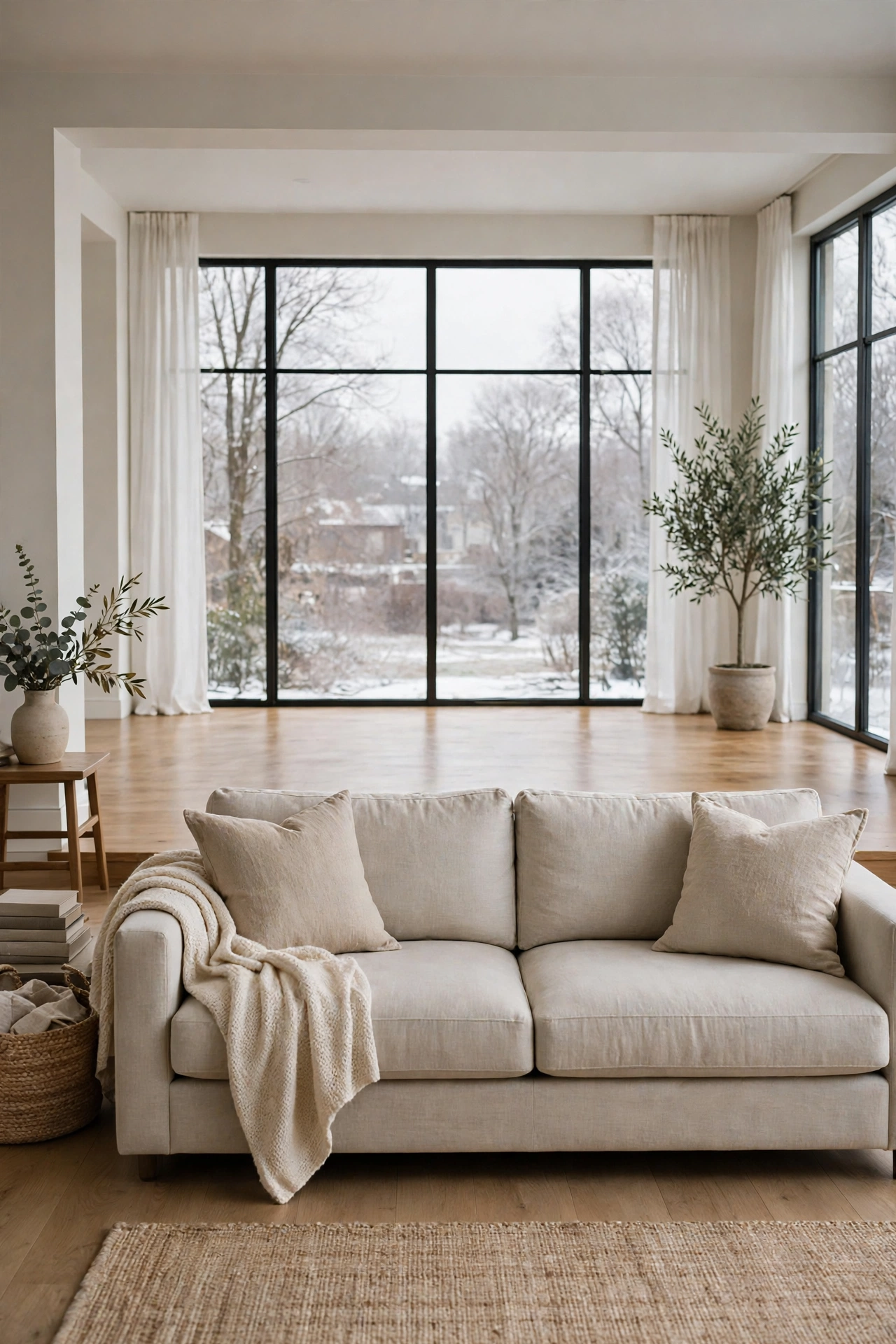
Stand in the doorway and look straight across to the sofa wall, and you will see the habit I had fallen into without noticing it. I had pushed every large piece back until it touched the wall, as if the middle of the room needed to stay empty for traffic. The sofa sat with its back pressed tight, the eye traveled straight past the seating to the far wall, and in low winter light that empty middle felt cold and unfinished rather than spacious.
I pulled the sofa forward by about eighteen inches, then stood behind it and looked again, and that small gap changed the balance of the room. I could walk behind the sofa without turning sideways, the rug suddenly had a clear edge to sit under, and the seating area formed its own shape instead of blending into the walls. I placed a narrow console I already owned behind the sofa, topped it with a lamp I had made from a plain base and a linen shade, and left the back of the sofa visible on purpose.
After a night of sitting there, I knew the change had worked because conversation felt closer and the room felt warmer, even though I had added no heat or color. If your sofa has been against the wall for a long time, try this first and live with the gap for a day, because that breathing room lets the rest of the room settle into place.
2. Turn the Dark Corner Into a Winter Reading Spot
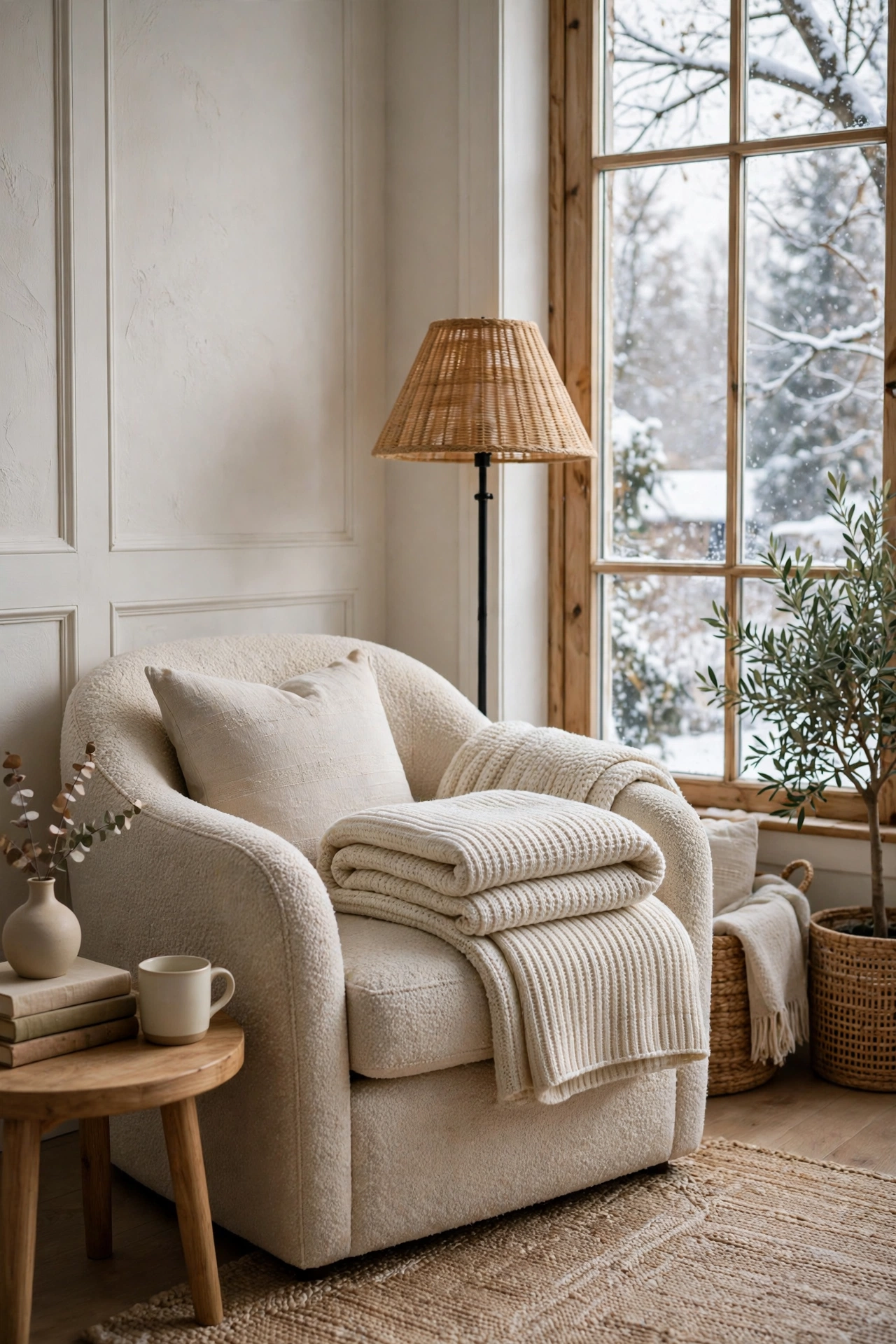
Walk to the far corner, past the bookcase where the ceiling light never quite reaches, and stand there at four in the afternoon when the sky has already gone flat and pale. In my room that corner had become a holding place for a plant that was not thriving, a stack of magazines, and a chair turned at an angle that faced nothing in particular. The problem was not that the corner was small; it was that nothing in it gave a person a reason to sit down, and a dark, unused corner makes the whole room feel smaller.
I moved a single armchair into that corner at a slight angle toward the room, so a person sitting there could see the windows and the sofa without turning around. I placed a tall floor lamp behind the chair where the light would fall over a shoulder instead of shining straight into tired eyes. I sewed a cushion cover from fabric I had, folded a thick blanket over the arm, and set a small stool beside the chair for a mug and a book.
Now that corner is the first place I head to when the light fades, and it has changed how the room feels after dark because there is a warm pool of light at the far end instead of a shadow. Stand in your darkest corner, notice where the light stops, and give that spot one chair, one lamp, and one reason to stay.
3. Swap Thin Pillows for Layers of Heavy Winter Texture

Come back to the sofa and sit down the way you actually sit in January, with your feet tucked up and a blanket within reach, and notice how the pillows you loved in summer suddenly feel thin and flat. Mine were light cotton covers that looked fresh with the windows open, but in winter they slid around, offered no weight, and discouraged anyone from settling in. The room needed texture I could feel, not just color I could see, and layers that would stay where I put them.
I took the thin covers off and sewed new ones from heavier fabric I had saved: a nubby woven cloth for two large square pillows, a soft brushed cotton for two smaller ones, and a knit-look fabric for a long lumbar pillow. I filled them firmly so they would hold their form, and I placed them in order, large and firm at the corners, softer and smaller toward the middle, with the lumbar pillow bridging the gap where backs tend to slip. I folded two throws over the arms so each seat had its own layer ready.
The difference was immediate to the touch and slower to notice with the eyes, which is how winter texture should work. Choose fabric by how it feels in your hands on a cold day, because your body will tell you sooner than your eyes whether a pillow belongs in a winter room.
4. Layer a Second Rug So Cold Floors Feel Softer
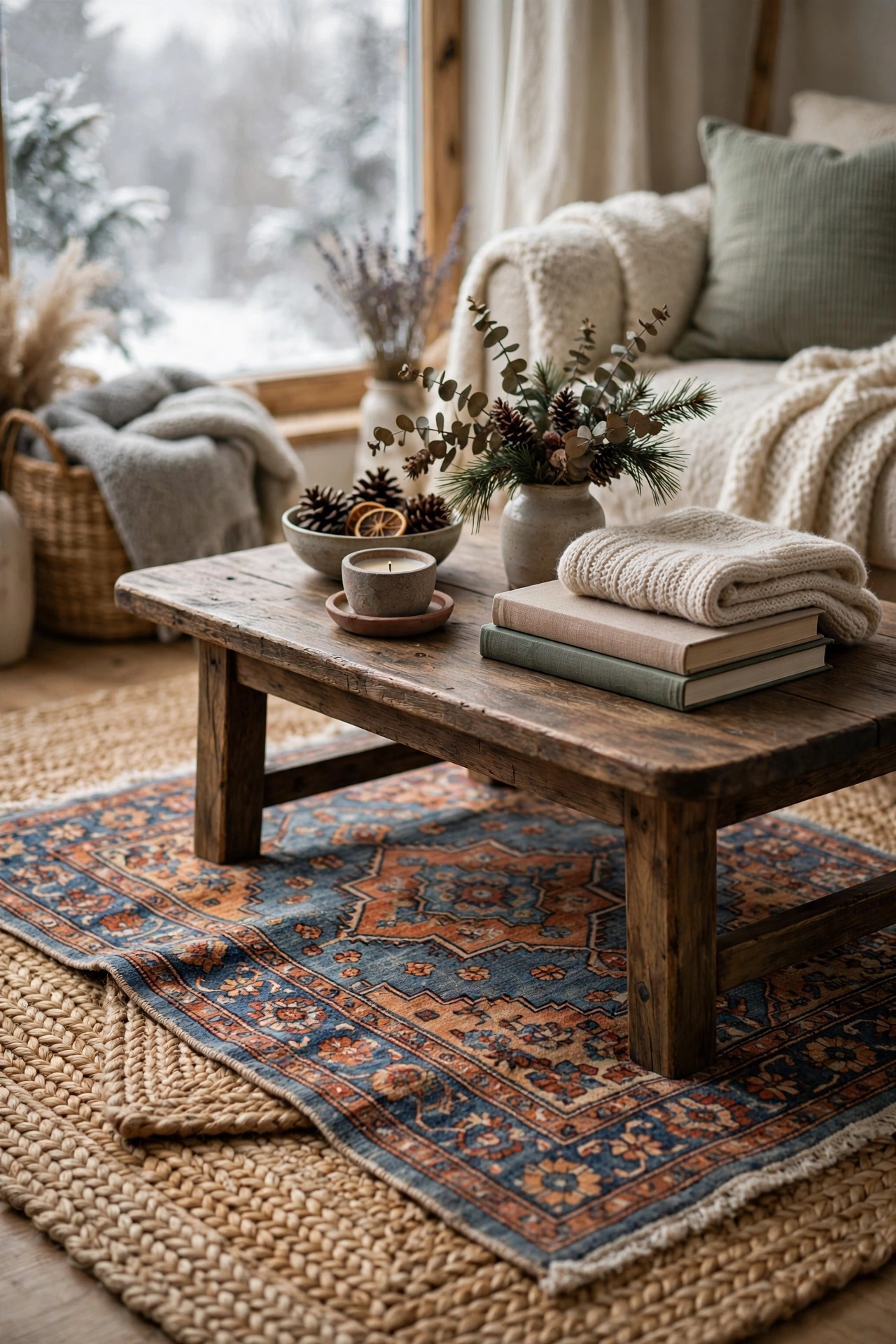
Step into the center of the room in socks on a cold morning and pay attention to what your feet tell you before you look down, because in my house the floor gave the whole refresh away. The rug I had was right for summer, with a flat weave that stayed cool, but in winter it felt thin underfoot, the edges curled where chairs rolled over them, and the bare wood around it looked colder by contrast. The seating area needed a warmer base, not a larger rug I did not own, and a layer that would make the middle feel like a place to stay barefoot.
I laid a second, softer rug I already owned on top of the first, offset by a few inches so the edges of both layers were visible and the pattern underneath still showed at the corners. I chose a thick, plush rug for the top layer, large enough to sit under the coffee table and reach the front legs of the sofa and chairs, and I smoothed it by hand until it lay flat.
The layered floor changed the sound of the room as much as the feel of it, because footsteps softened, chair legs stopped scraping, and the center gained a clear boundary that held the furniture together. Try layering before you shop for a replacement, and let your feet decide, because a winter floor should invite you to slow down the moment you step onto it.
5. Clear the Mantel Shelf and Let the Light Lead
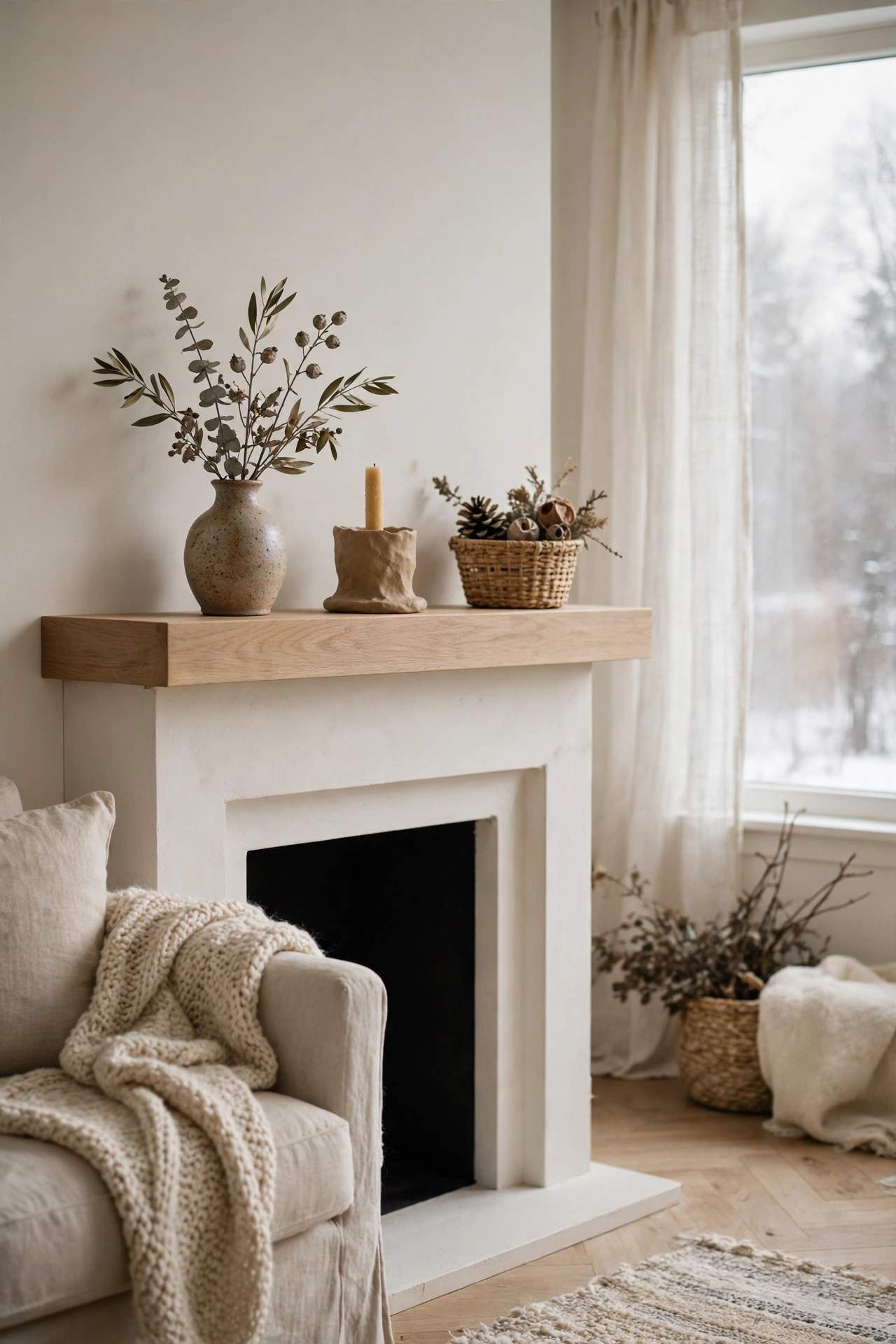
Stand directly in front of the mantel shelf and look at it at eye level, not from across the room, and count how many objects are competing for attention in a space only a few feet wide. Mine held framed photos, candles, small boxes, and a vase, all placed there over time without anything ever being taken away, and from the doorway the shelf read as one crowded line instead of a focal point. Winter light is already scarce, and a crowded shelf blocks it visually, catching shadows between objects and making the wall above it feel heavy.
I took everything off the shelf, cleaned the surface, and stood back to look at the empty length of wood in the afternoon light before I put a single thing back. I chose three pieces only: a tall handmade vase I had shaped and glazed myself, a low wooden bowl, and a single framed print, spaced so each one had empty air around it. I placed the tallest piece at one end, the bowl in the middle, and the print leaning slightly, leaving the rest bare on purpose.
The cleared shelf made the whole wall feel taller and the room feel lighter, even though I had removed things rather than added them, and the afternoon sun now lands on the wood and the vase in a way I had never noticed. Clear one shelf completely before you rearrange it, and resist filling every inch, because the empty space lets the pieces you keep be seen.
6. Hang Heavier Curtains and Frame the Short Winter Days
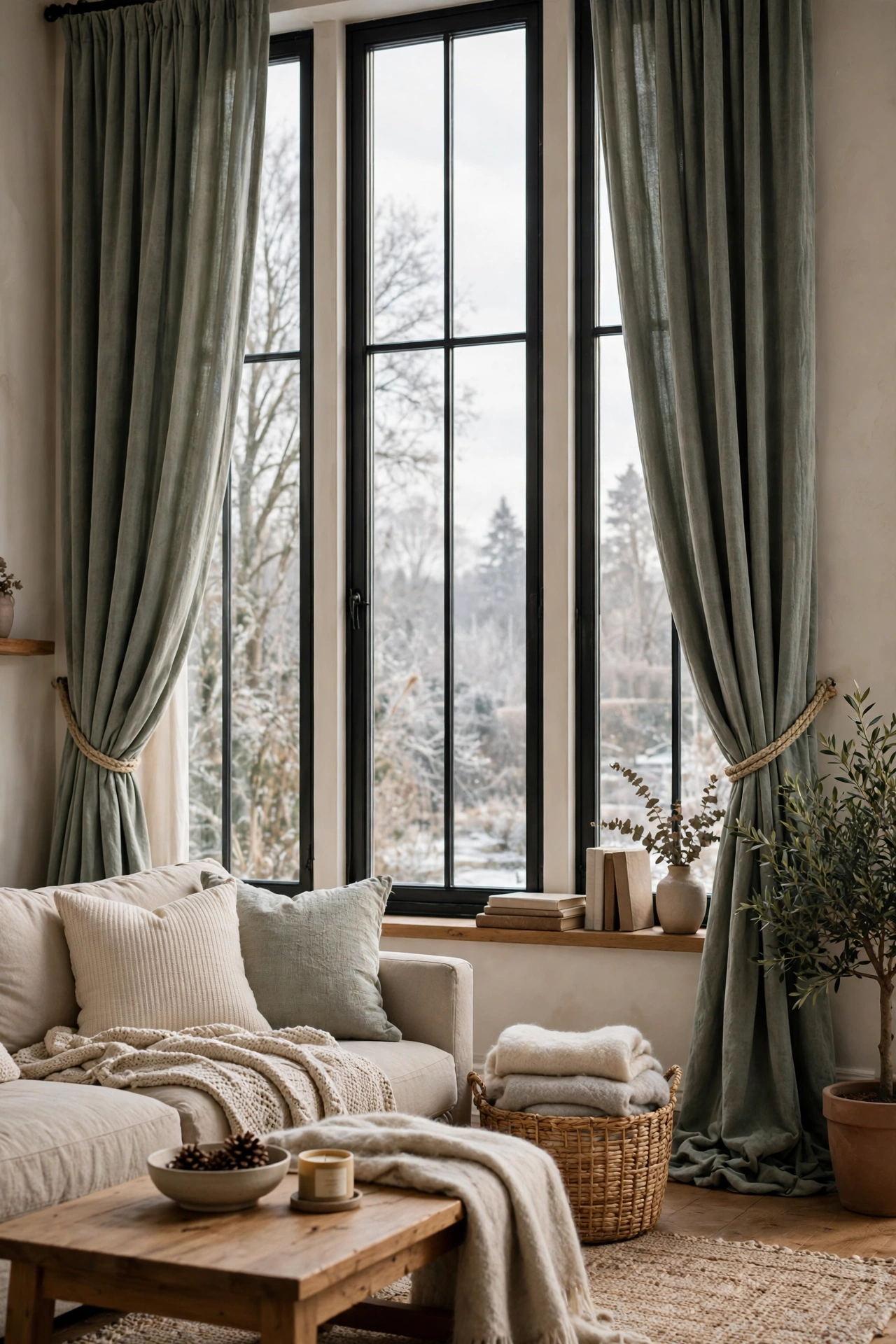
Move to the windows and stand beside them in the late afternoon, when the sun sits low and the glass goes from bright to dark in less than an hour. My windows had light, sheer panels that were perfect for summer breeze and soft morning sun, but in winter they hung limp, did nothing to hold warmth at the edges of the room, and after sunset turned into dark rectangles that made the walls feel exposed. The windows needed weight and structure, not more decoration, and they needed to frame the short days instead of apologizing for them.
I sewed simple curtain panels from a heavier linen-blend fabric in a warm, neutral tone, with a straight hem and a clean rod pocket, and I hung them high, just below the ceiling line, so the windows looked taller. The fabric fell in long folds, and I kept the panels pulled aside during the day with ties I made from the same cloth, so the glass stayed open to the light. I closed them fully at night, when the weight of the fabric made the room feel enclosed and quiet.
The heavier curtains changed the rhythm of the room from morning to night, because daylight now enters through a clear, framed opening and evening brings a soft boundary that holds the lamplight inside. Stand at your windows at dusk, notice where drafts and darkness gather, and give the glass a heavier frame, because in winter the windows set the mood for every other change.
7. Restyle the Coffee Table as a Low, Changeable Display
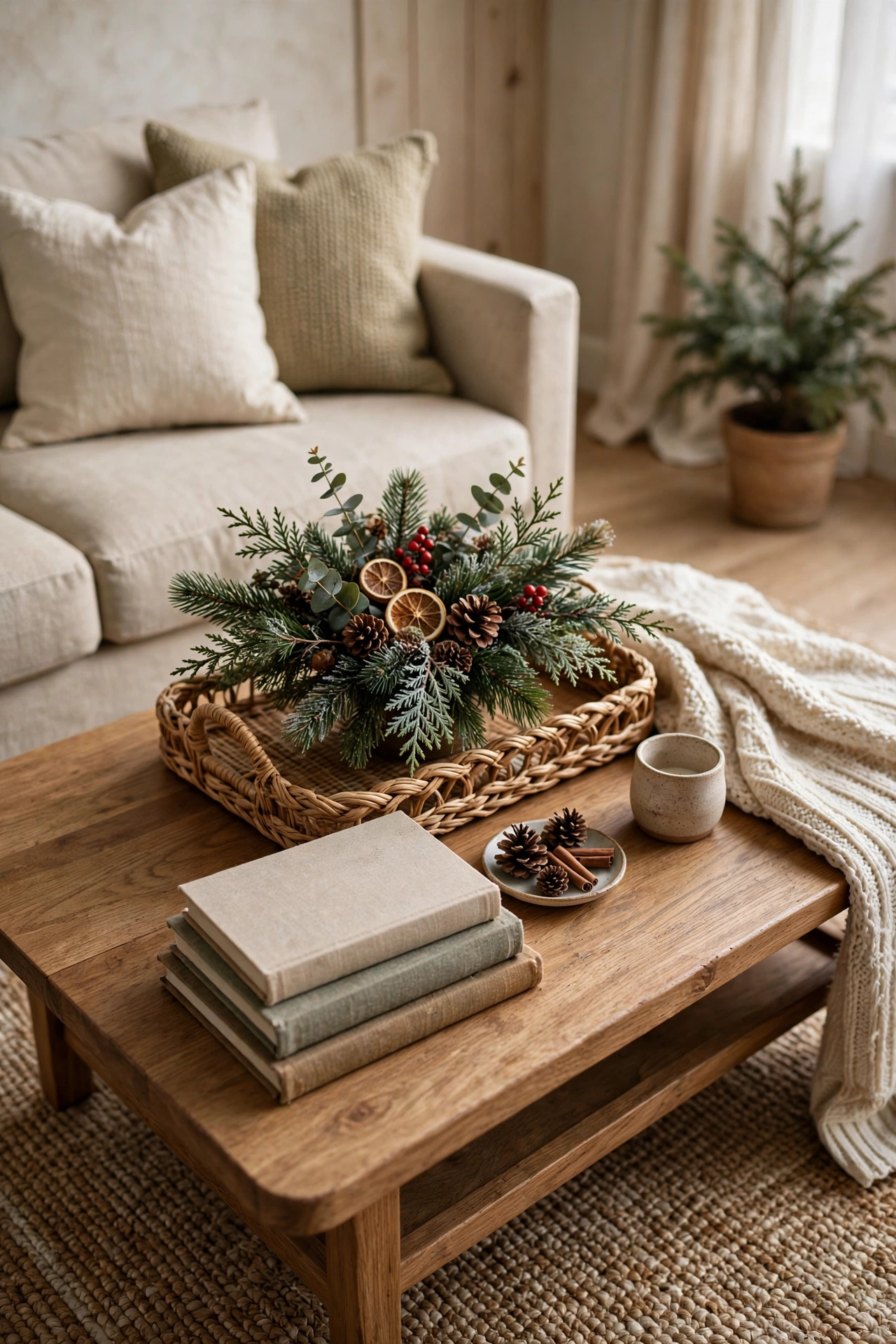
Kneel down beside the coffee table, so you are looking at it from the height of a person sitting on the sofa, and notice how different it looks from standing height, where most of us arrange it without thinking. From above, my table had looked tidy, but from sofa height it was a flat surface with objects lined up in a row, a remote, a candle, and books no one reached for, and it blocked the sightline across the rug. A winter coffee table needs to work at sitting height, hold what hands actually reach for, and change easily when the evening shifts from tea to reading to conversation.
I cleared the table completely and started with a low wooden tray I had made, placing it slightly off center so open wood still showed on one side. Inside the tray I set a small handmade ceramic dish, a short stack of two books I was actually reading, and a tiny arrangement of dried stems in a low jar, keeping everything low enough that I could see across to the person opposite me. I left the other side open for mugs and a blanket, with one rule: nothing tall, nothing fragile at the edge, and nothing untouched for weeks.
The table now works the way the room needs it to work in winter, as a shared surface that invites hands to reach, books to be picked up, and mugs to be set down without a careful rearrangement. Restyle your table from sitting height, keep the tallest object below eye level, and leave one side open, because a winter room is lived in at sofa height, not admired from the doorway.
8. Pull the Armchairs In Close for Winter Conversation
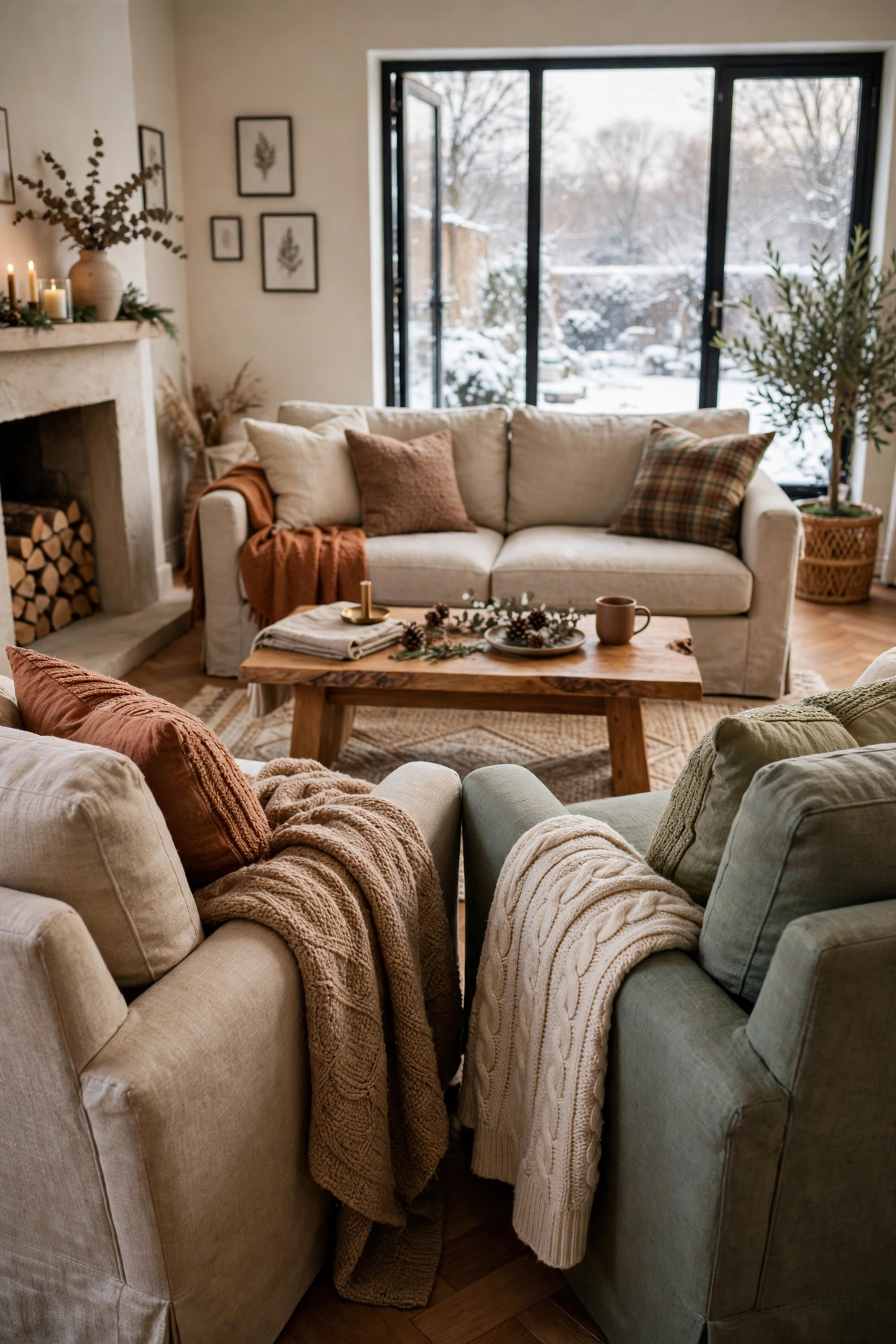
Stand behind the armchairs and look at the distance between them and the sofa, measuring it not with a tape but with your voice, by imagining a normal conversation across that gap on a quiet evening. In my room the chairs had drifted outward over the summer, one angled toward the television, one turned toward the window, and the space between them had grown wide enough that talking across it required raising your voice slightly. Winter evenings ask for closeness, for voices staying low, and furniture that sits too far apart quietly discourages the gatherings winter is made for.
I pulled both chairs in by several inches, angled them gently toward the sofa and toward each other, and stood in the middle of the new grouping to check that I could reach the coffee table from any seat without stretching. I placed a small handmade side table between the chairs, just large enough for two mugs, and added a folded throw to each chair, not as decoration but as an invitation to stay. I sat in each chair, checking the view and lamp reach, and moved one chair back two inches when it crowded the path.
The closer grouping changed the evenings immediately, because conversation dropped to a comfortable level, the lamplight pooled over the seating instead of scattering to the walls, and the room finally had a clear center where people gathered without being asked. Pull your chairs in, sit in each one, and listen to the room at talking volume, because the right distance is where you do not have to lean forward to be heard.
9. Move Art Down to Eye Level and Slow the Whole Wall
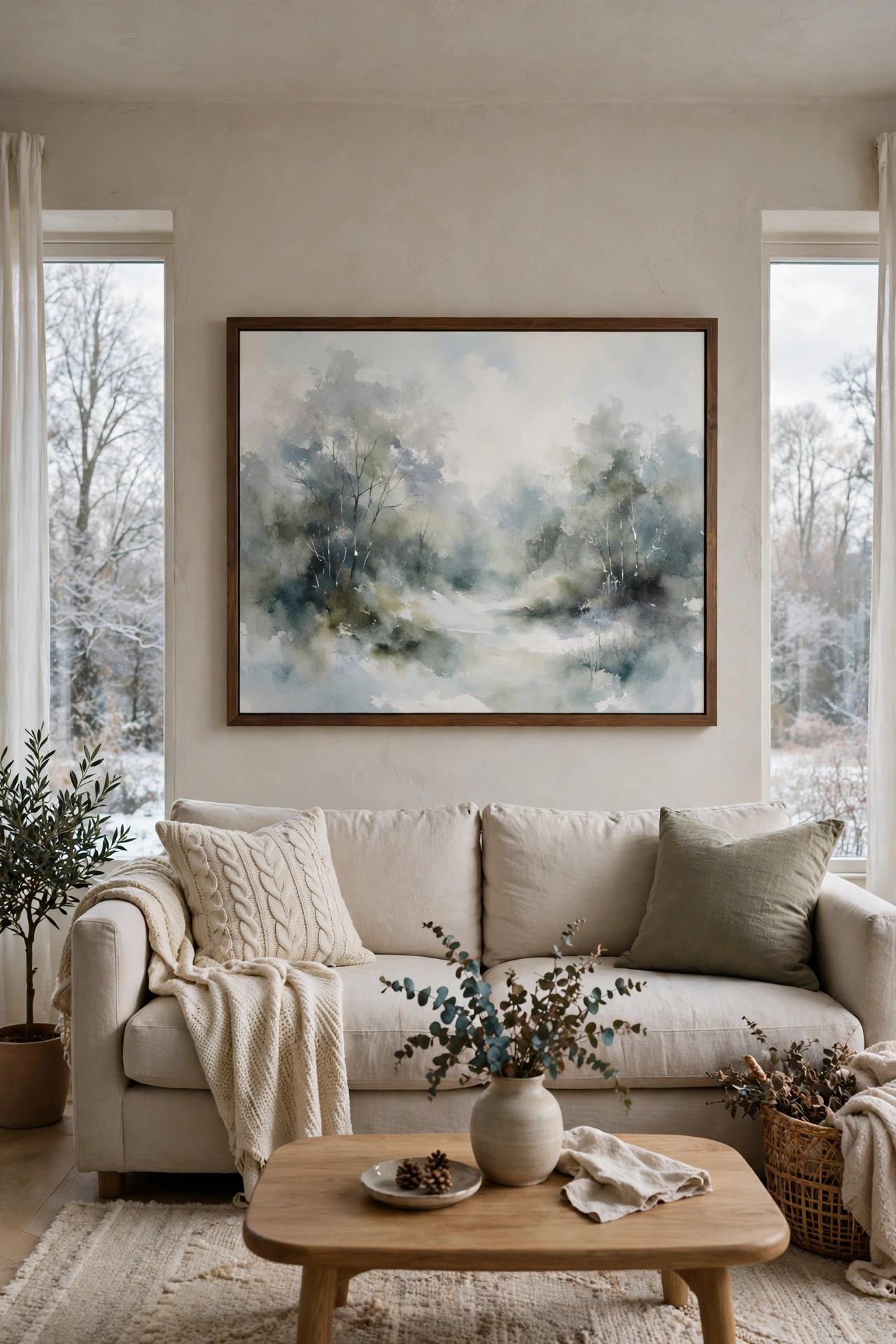
Stand against the opposite wall and look at the large piece of art above the sofa, noticing first where its center sits in relation to your eye level and then how much empty wall stretches between the sofa and the frame. Mine had been hung high, at a height that made sense when I stood on a ladder with a hammer, but from the sofa it floated above the seating, disconnected from the furniture below it. In winter, when we spend more time sitting and looking across the room, art that hangs too high pulls the eye upward and away, instead of holding it where life in the room happens.
I took the piece down, patched the old holes, and rehung it so its center sat at the eye level of a seated person, with only a few inches between the frame and the top of the cushions. I checked it from the doorway, the sofa, and the reading corner, and adjusted it once by a single inch until it felt settled. I left the wall around it bare, with no small frames crowding its edges, so the one large piece could slow the whole wall down.
The lower art changed the scale of the room in a quiet but complete way, because the sofa, the pillows, and the wall now read as one composed group instead of three separate decisions. Check your largest piece from a seated position, lower it until it meets the furniture below it, and let the empty wall above it stay empty, because a winter room needs calm at eye level.
10. Swap Small Winter Details at the Entry to the Room
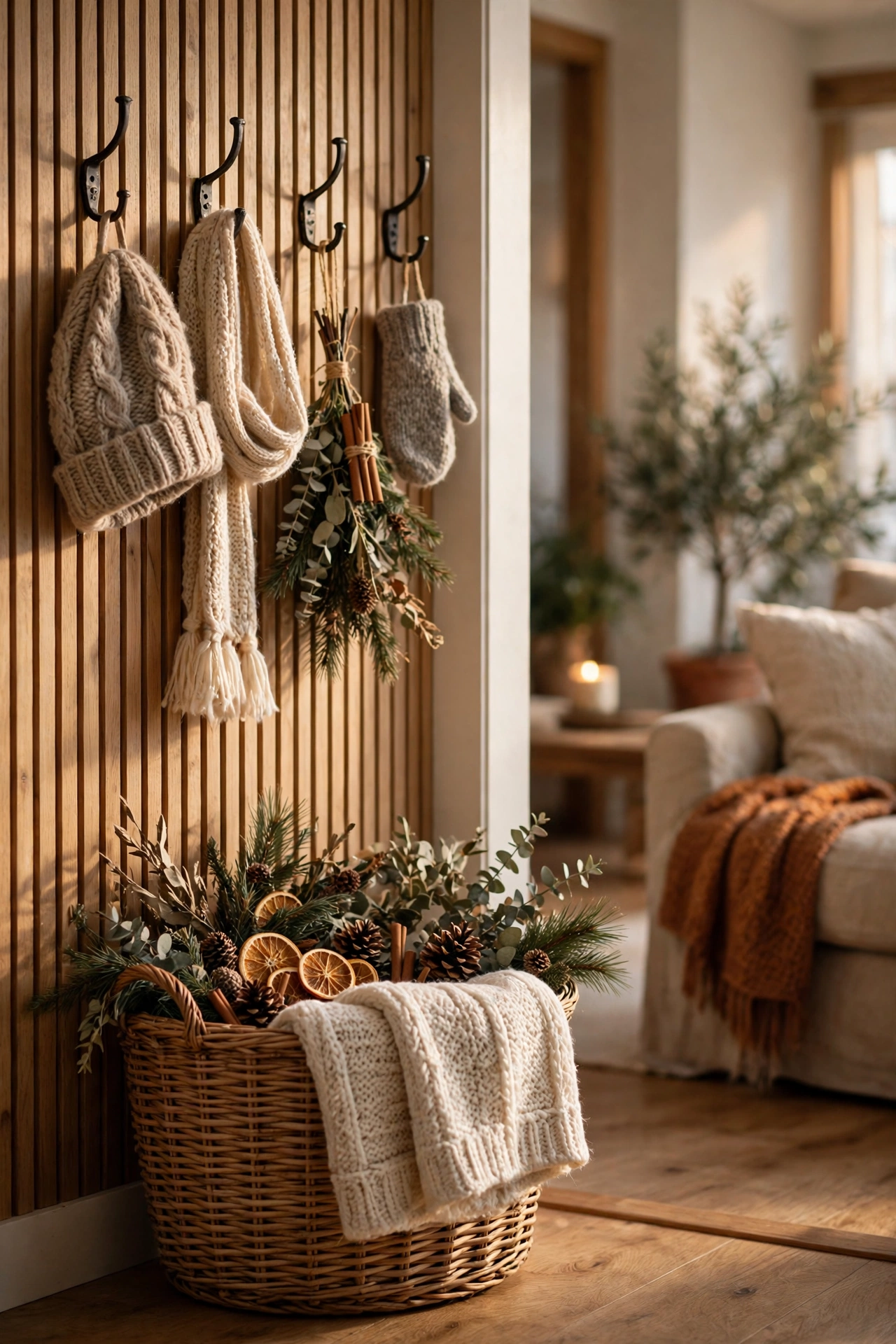
Finish the walk where you started, at the threshold where you enter the room, and stand there with your hand on the doorframe, looking in as if you are arriving home on a cold evening with wet shoes and cold hands. The entry edge of my living room had been an afterthought, a place where coats landed on a chair, shoes gathered by the wall, and a basket overflowed with things that belonged elsewhere. That first sight set a cluttered tone for the whole room before a person had taken two steps inside, and a refresh is incomplete if the entrance still tells a story of hurry and cold.
I cleared that edge completely, placed a low woven basket I had made for gloves, scarves, and hats, and hung two simple wooden hooks at a height that keeps coats off the furniture and off the floor. I set a small handmade mat just inside the doorway for shoes, placed a folded blanket on the nearest chair arm so a cold arrival could reach warmth without crossing the room, and put a single low lamp on a small table near the entry, on a timer, so the room glows softly before anyone switches on the main lights.
Now the threshold works like a welcome, because the eye meets order, warmth, and light in the first few seconds, and the rest of the room unfolds from there without the distraction of clutter at its edge. Stand at your own entry, arrive as a guest would, and fix the first three feet before you touch anything deeper in the room, because a winter living room should greet you warmly at the door.
Conclusion
Walk the room once more, slowly, from the doorway to the sofa, from the dark corner to the windows, and notice how little I actually bought or built new to make this refresh happen. The sofa holds the center, the corner glows, the pillows and rugs carry winter weight, and each zone does one job well. That is the heart of refreshing a living room for winter: not one dramatic change, but small, handmade decisions that add up to a room that feels warmer and clearer when the light is low.
If you try these ideas, give yourself the same slow test I gave myself, and live with each move for at least one evening before you decide it belongs. Stand where I stood, sit where I sat, watch the morning light and the lamplight separately, and trust what your feet, your hands, and your voice tell you about distance and texture. Start at the doorway, move zone by zone, and let winter show you, one small swap at a time, the room you already had waiting underneath.